Hi all!
I will be away from Dec 2014 to 05 Jan 2015. Will be right back before you know it (hopefully, with great insights).
Till then, here’s wishing all of you a great xmas and new year ahead!
Cheers!

CFP, representing Financial Alliance
Good financial planning is making choices that allow you to live the best possible life for yourself – both now, and in the future. I
Hi all!
I will be away from Dec 2014 to 05 Jan 2015. Will be right back before you know it (hopefully, with great insights).
Till then, here’s wishing all of you a great xmas and new year ahead!
Cheers!
So… I am back from my “Recharge Trip” to Krabi and I am now rejuvenated and ready for the next stage of 2014. Just like the equity market, which also took a breather (markets corrected with global investors taking profits) but is now ready for the next up-leg.
But more about my trip for now…This time round when I set out for my trip, I planned a little project for myself – that is, to get to know 3 other travellers and to ask them about their view/story on one of the following topics: Happiness, Love & Career.
And here is the one on Happiness.
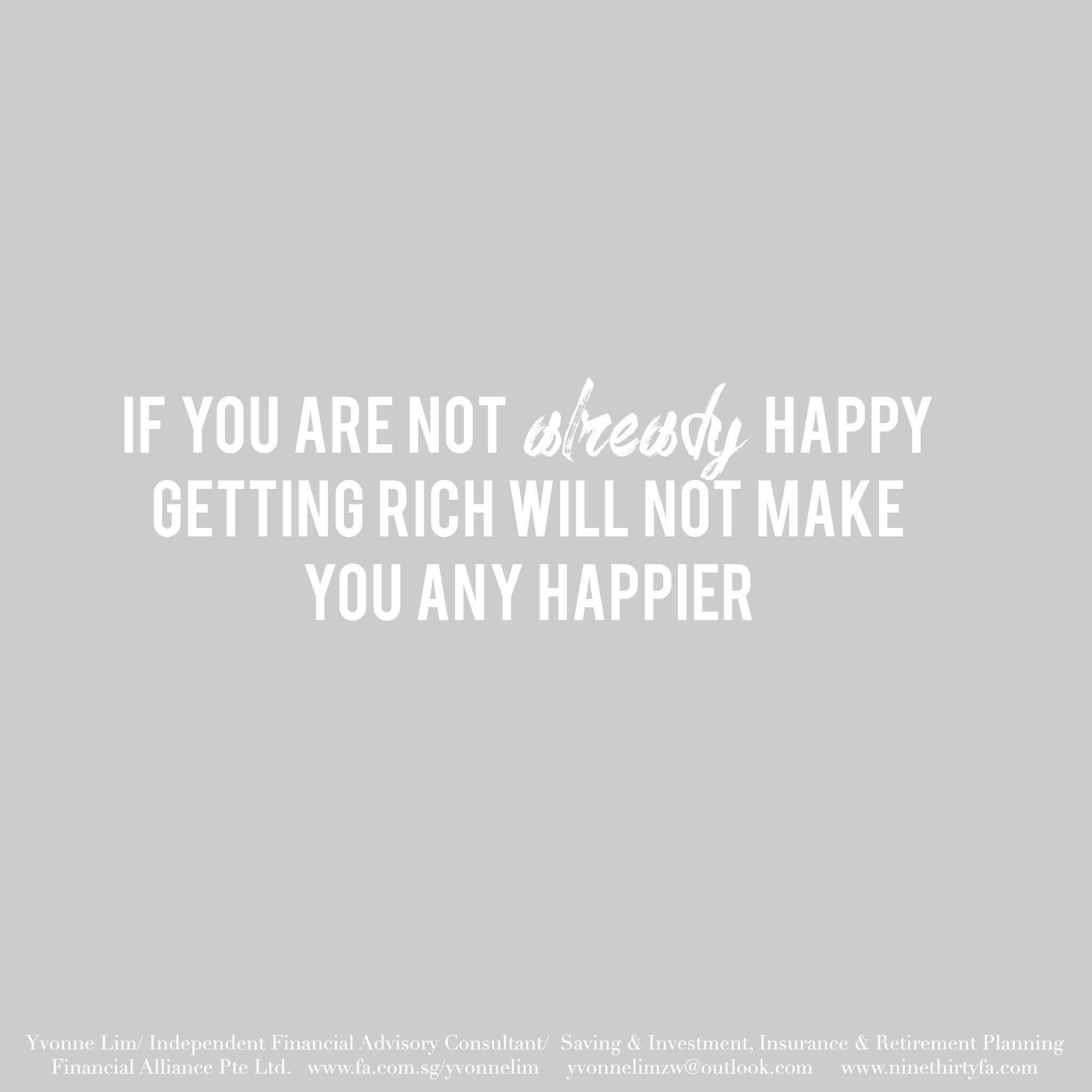
His name is Henry and I met him while hiding from the rain on my 3rd day at Krabi. We had pretty long conversation about the relationship between Money & Happiness and about how our society is really attached to the belief that Money can make us happier – people believe that the new dress, a new car, bigger house, better paying job will make them happier (though research has shown that it does not, at least not for the long term).
However, this isn’t all to it. A day after returning to Singapore, I attended a training by Liberty. The speaker shared the exact same thing (seriously, what are the odds) but with an extension and I think it wraps up the relationship between Money & Happiness nicely.
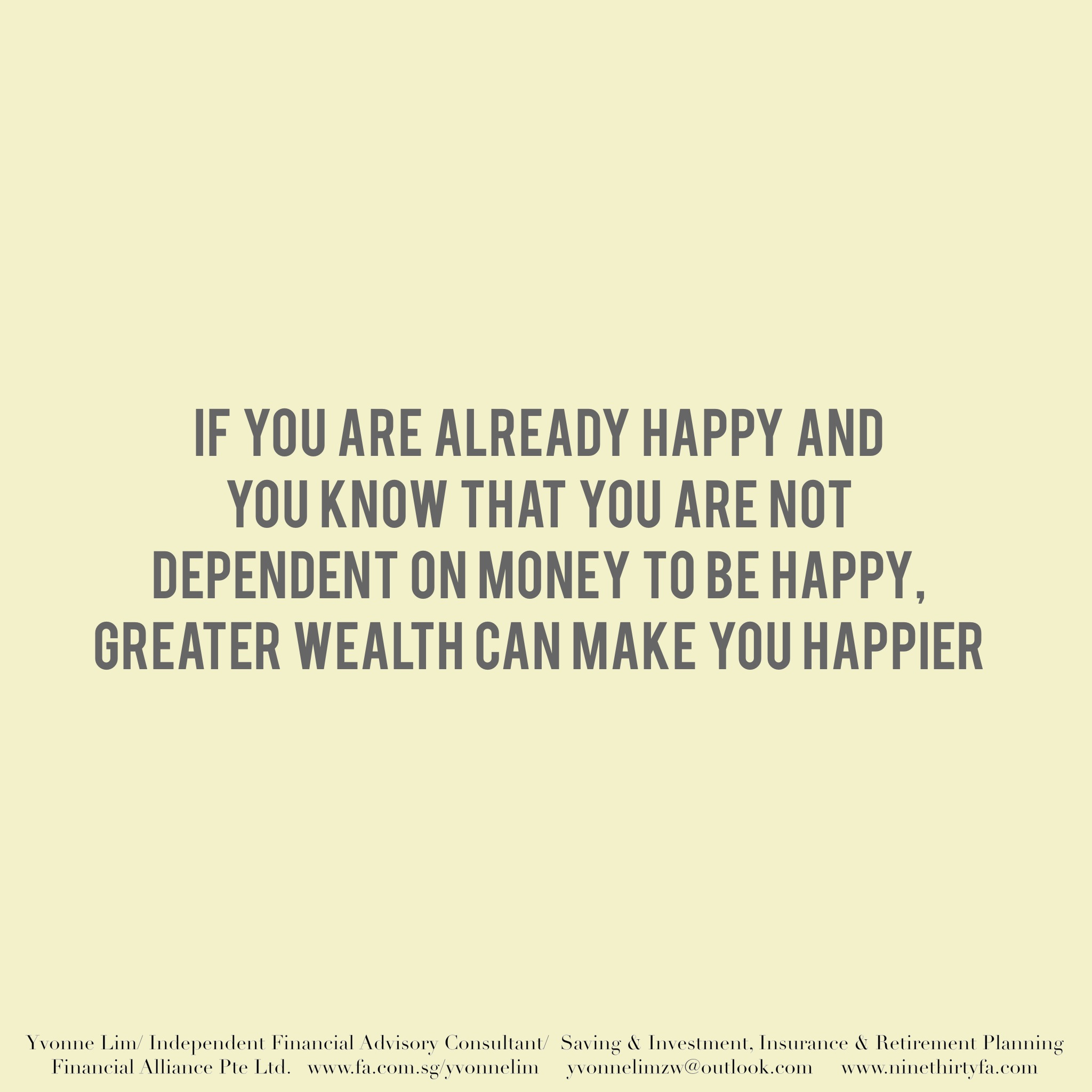
A lot more wholesome, don’t you think?
As people become more financially savvy & aware, many also become more sensitive about their parents’ financial plans (or lack thereof) and are concerned about how it may affect their own planning & dreams. Most commonly, we are concerned with what happens when our parents fall ill because such an event can have detrimental impact to your financial plans.
For example, if the need for long term care arises, as the cost of such care in Singapore can run very high.
Continue reading The important questions to ask yourself & your parents.
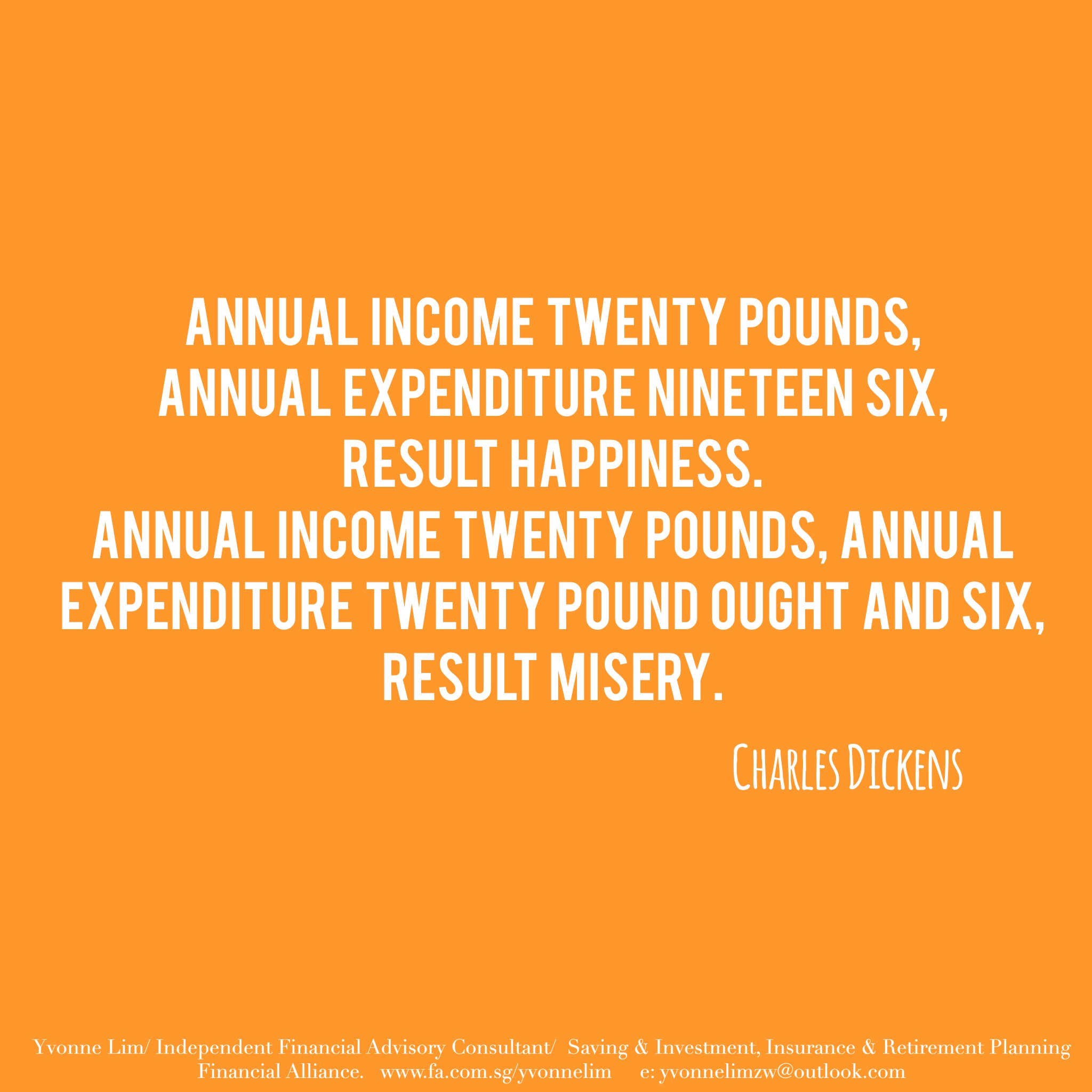
By Wilkins Micawber in the book David Copperfield, Charles Dickens. He knew better than most then.
This is perhaps the least sexy concept in personal finance… and in our time, you probably will not even be able to retire comfortably by simply saving. But that being said, failing to save at all is the most definite way to fail because it is not just about the money, but the opportunities that you buy yourself.
After all, no one lends to people who cannot pay and few would invest in businesses which cannot manage their cash.
If it has slipped your mind, here’s a gentle reminder that you can use Medisave to pay for your outpatient vaccinations, including Human Papillomavirus (HPV) Vaccinations against cervical cancer. This is applicable for females between the age of 9-26. So for my female friends who are turning 26 and who have yet gotten their vaccine. Do it quick. Time is ticking.
And since I am on the topic, here’s some info I learnt about HPV from various sources and from my doctor when I went for my Chicken Pox booster jab
 CFP, representing Financial Alliance