Live Life to your Fullest, Now and Always.

2014-09-25 07.06.59

Just recently, there was a piece on Straits Times on how Singaporeans are splashing on out travel and expensive meals – on just how much more Singaporeans are spending than 10 years ago. Reading the article, I felt somewhat conflicted. It makes me wonder if this is a good, bad or neutral trend. It makes me wonder if there is a social complication to it, if it is a ‘problem’ that needs to be addressed. In the end, I decided that maybe it is not all that important.

Like some of the interviewees, I will not pull back my dollars spent on vacation because it is something that I enjoy. And life is simply too short for us to not enjoy. The above statement may seem odd coming from a financial consultant but what I really do mean is this: Live life to your heart’s desires, now and always. This means that our action today must not jeopardise our (or others’) life tomorrow. If you can spend & travel to your heart’s content and still be responsible for your own future, then by all means, go ahead.

All in all, the more important question we need to ask is: Is our action today jeopardising (or still supporting) our life tomorrow?

Continue reading Live Life to your Fullest, Now and Always.

3 Steps to Liberation (breaking bad money habits and starting better ones)

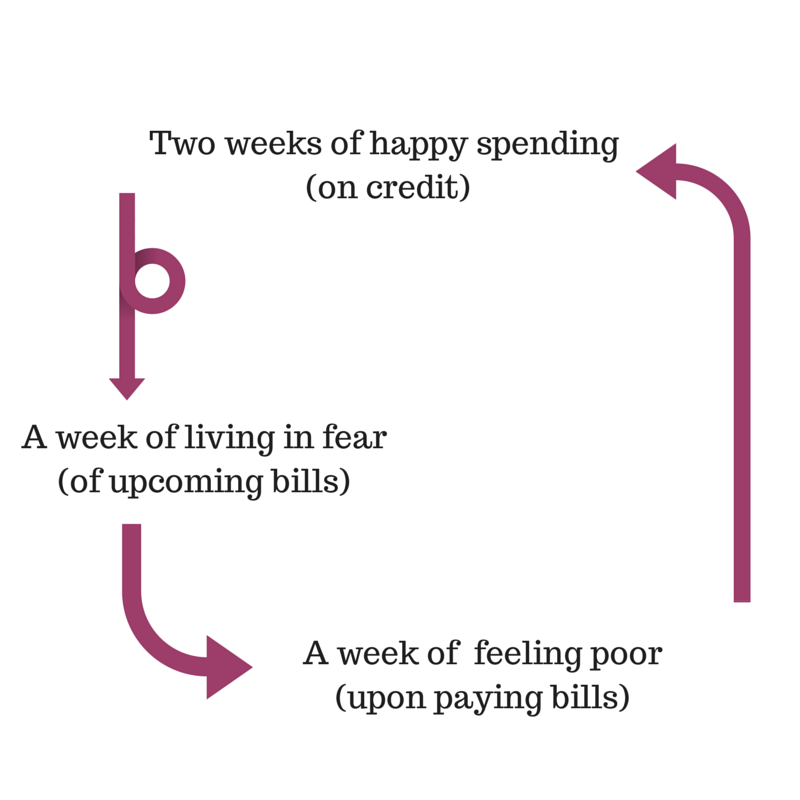
Recently, I spoke to a client (a teenager) on her spending habits. This is her description on how she feels on a monthly basis:

happy spending

Countless research and poll have shown that it is much easier to overspend with this mode of payment because when we sign off the plastic, we do not experience (visually) that we are spending-  our bank account value does not decrease, the cash in our wallet remains as it is. Sometimes, we are even lured into a false sense of security of having more money, for example in the case where friends return you their share of the expenses charged to your card – but which becomes money which you eventually spend (on yourself). Sometimes, we convince ourselves that we are enjoying the rebates/discounts of the credit card company – which is all true until when the bill date draws nearer and we realise that we have spent more than what we should  have.

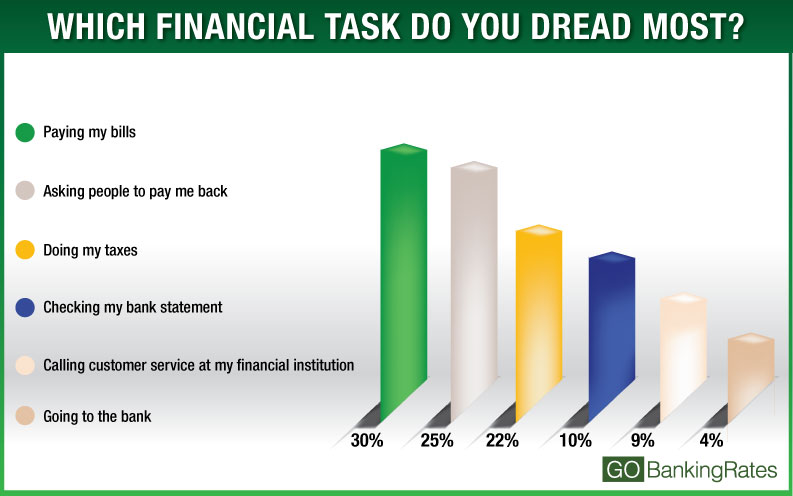
Then, the dread comes. The fear of paying the bills is not uncommon. A poll conducted by gobankingrates.com (US site on interest rates of financial services) shows that of the various financial tasks, people dread paying the bills the most.

DreadMostFinancialFear

This vicious cycle is more than just an emotional roller-coaster.  The cycle itself does not promote good habits because we spend before we save.  What we really need, is to cultivate a healthier habit.  And here are 3 steps that will lead you to that.

2014-09-13 3 steps to liberation money habits

Continue reading 3 Steps to Liberation (breaking bad money habits and starting better ones)

What you treat with devotion, grows.

Recently, I have been becoming more curious about people’s attitudes towards money & life in general. And I think I came across a phrase that sums it all up – What you treat with devotion, grows. 

2014-07-04  devotion grows quote

In fact, whatever you treat with devotion grows. And while devotion is technically a noun, I think it also represents as a verb. It is what you put into action until eventually, one side of the spectrum wins.

Most people understand this concept for relationships. We know that when we treat relationships with devotion (time & effort), it flourishes. But the thing, this really applies for most other aspects in life too- business, career, education and money (financial well being) too.

Take for example, if you have a low devotion towards money and do not treat it with care, you are likely to spend more or be more careless on spending it. At the end of the day, you may find that there has not been much growth in your wealth.

If you have a high devotion towards earning money, you are likely to navigate yourself on course for that. You grow, your ability grows, your earning potential grows.

If you have a low devotion towards investing your money, then of course your portfolio is unlikely to grow. In fact, it would be more likely that you lose your capital.

If you have a high devotion towards financing/donating money, then you would always find your position to give. And those whom you give and treat with devotion? They grow.

The sunk cost fallacy

2014-06-18 Sunk Cost The one thing that stuck with me from my biz module back in NTU was the concept of sunk cost, and the sunk cost trap.In economic/business terms, a sunk cost is a cost that has already been incurred and thus cannot be recovered. And the sunk cost trap is about the psychological need to protect these past choices (and protect our prior monetary/emotional commitment). Here are some examples of this sunk cost fallacy.


1. Imagine you go see a movie which costs $10 for a ticket. When you open your wallet or purse you realize you’ve lost a $10 bill. Would you still buy a ticket? You probably would. Only 12 percent of subjects said they wouldn’t. Now, imagine you go to see the movie and pay $10 for a ticket, but right before you hand it over to get inside you realize you’ve lost it. Would you go back and buy another ticket? Maybe, but it would hurt a lot more. In the experiment, 54 percent of people said they would not. The situation is the exact same. You lose $10 and then must pay $10 to see the movie, but the second scenario feels different. It seems as if the money was assigned to a specific purpose and then lost, and loss sucks (www.youarenotsosmart.com)


2. On the same example of movie ticket, let’s assume you have bought a non-refundable ticket for the evening. When evening arrives, you realise that you no longer feel like watching the movie – but you still drag yourself to the theater because you have already paid for the tickets. It doesn’t really make sense because the money has already been spent. The real choice was a) be happy by staying at home b) put yourself in a worse mood by going for the movie.


3. Now imagine you are a business owner who have invested a substantial amount to build a factory. Due to unforeseen circumstances, the company will need to pump in more money to complete the construction. It is easy to justify the additional capital because without it, the initial investment and plans would go to waste. However, the more important question is if the future income will justify that additional capital. If not, the loss would simply be bigger


4. Of course, the same trap often happens in investment decisions. Time to time, I come across investors who would adamantly stick to their initial investment choices so as to avoid locking in losses (sometimes, even when it is just paper loss). This is in part due to the emotional commitment to the investment itself. But truth is, If you are holding on to a sinking stock, it would be much better to get out fast and get into another asset class/stock which is better positioned for recovery.


5. The sunk cost fallacy also happens in relationship. Imagine this: You are now 30 years old and have invested 7 years of your life to the man/woman you used to love. Both of you have gone through various experiences together and have invested much time and emotions to each other. Then at some point, you start getting the feeling that he/she may not the one you want to spend the rest of your life with… But you stay in the relationship anyway. Because of the aversion of loss – you do not wish for that 7 years to ‘go to waste’. Though in reality, what is really at stake is not the 7 years that have passed but the 50 years ahead.

It’s not easy to avoid the sunk cost trap.., But if we are able to, we would consistently be making better financial, business and life choices for ourselves and hence, likely to be much happier 😉

The Stranger Test

2014-04-15 09.00.15

I have a horrible habit of making impulsive purchases during my travels. So this time round, I decided to take matters in my own hands and find some way of avoiding it- so that I do not end up with clothes that I will never wear or with souvenirs that will never see the light of day and so on.

After scouring the internet for tips, I decided to practice this ‘trick’ – The Stranger Test. 

This is what you do: When you’re going to make a purchase, however big or small, picture a stranger holding your purchase in one hand and the cash it would take to buy it in the other – he is offering to give you one of the two, which would you choose? The $1,000 cheque or the new mobile phone? If you end up choosing the cash, then it would do good to keep that money in your pocket.

And it worked beautifully for me –  granted I still spent a chunk, but it’s all on things I actually like, no junk purchases. Try it the next time you are overseas. It worked for me and it may, for you.


Till my next travel….

The concept of the Stranger Test first came up in 2009 on Five Cent Nickel