Why I want to be covered for Early CI

20140227-092041.jpg

Most of the young adults who have asked me about life insurance knows that I am a believer of Early Critical Illnesses (Early CI) coverage – especially for certain profiles of people. I happen to be one because

  1. I am young and am just started out
  2. I am a self employed (your working profile)
  3. I would want to recover in style

Young
I believe early CI coverage to be important for young adults because we are all just starting out in our lives. During this stage, we are working hard to achieve our dreams and goals – making sure we will be able to pursue our needs and wants at some point in the future- get married, own our own property, start a business, travel, etc. At this stage, most young adults also probably do not have much (yet). Likely $30k- $90k (of your own money) if you have only been working for less than 3 years.

If you were to fall ill at this point, your goals would likely be disrupted- savings come to a standstill and existing savings may be depleted in the course of recovery. For this reason, I believe in early critical illness coverage. Because falling ill is bad enough without having my future goals mucked up too. So yes, I want someone (whoever/whatever it is) to give me a lump sum of money to protect my plans.

Self Employed
Having a healthy physical and mental being is of utmost importance to me as a self employed, more so as I am in the advisory line where being present is well, a prerequisite. If I were to be ill for an extended period of time, I know I would want to (will have to) hire another personal assistant so that I can direct my energy to the most important parts of the job. This would then be an additional out of pocket cost to me.

Hence, your job benefits and your role in the firm would influence your need to be covered for this early CI. Beyond the workplace, it is also ideal to consider the family – how likely would you incur additional cost for the family if you fall ill? Or on the other hand, how much are you able to (or want to) rely on the family in such an event?

Recover in style
Early CI is often not life-threatening upon detection and optimistically, most would recover from such an event. Through the course my work, some of my clients have shared their personal stories with me about how they themselves or a party of their family faced an event like this and recovered… so it got me thinking about how I would want to celebrate the recovery: simple enough, a crazy holiday for everyone. My treat.

All in all, this is why I believe in having early CI coverage for myself.. The above factors may not stay relevant forever but at this moment, something’s backing me up

***

The Solution

There are many different vehicles to use to receive early critical illness coverage. Self insurance aside, there are term plans and whole life plans. Plans that require you to pay for as long as you wish to receive the coverage, and those that require you to pay only a certain number of years. There are insurers which follow unique definitions of critical illnesses, and others which follow the standard definition. Some give an additional coverage for special stated illnesses, others that don’t. At the end of the day, all we need to do is to find one that is suitable for ourselves.
Basic understanding on your Health Schemes

Despite being on most of the Govt medical schemes & subsidies, many Singaporeans still find themselves confused. What is the purpose and the differences between Medisave & Medishield & Medifund?

Medisave (The Saving Account)

As the name suggests, Medisave is a national saving scheme introduced in April 1984. It is 1 of the 3 CPF accounts (Ordinary, Special, Medisave) whereby your monthly CPF contribution is made to. The intention of this is to help individuals set aside part of their income to meet their future personal or immediate family’s hospitalization, day surgery and certain outpatient expenses. For someone aged below 35, the income contribution going into the Medisave account is ~7%.

Medisave contribution is compulsory if you are:

  1. a self-employed person; and
  2. a Singapore citizen or Singapore permanent resident;
  3. earning a yearly net trade income# of more than $6,000.

Medishield (The Insurance)

Medishield on the other hand, is an opt-out low cost basic medical insurance scheme. The purpose of the Medishield is to shield Singaporeans against large hospital bills which cannot be covered for by the Medisave balances. Premiums for this basic insurance is payable through the Medisave account (up to a limit). Currently, the coverage extends to Class B2/C hospitalisation bills and Co-payment is required- this means that the insured will have to co-pay part of the medical bill. The coverage is also ‘Sub-limit’ and this means that there is a limit to the amount claimable for each hospitalisation category. For hospital stays in higher wards or private hospitals, coverage will be pro-rated.

Q: So what are the Integrated Shield Plans & Upgrade that I hear about?

Medishield provides basic coverage, Singaporeans seeking more comprehensive coverage would enhance their health coverage via  Medisave-approved Integrated Shield plans. These plan retain the benefits and coverage of the basic MediShield tier, while enjoying enhanced coverage provided by their private insurers.
Premiums are likewise, paid by Medisave. For individuals who do not wish to pay for any co-payment, an additional rider can be taken up along with the upgrade to cover for it. Cash premium is applicable for such riders.

Q: So who do I claim from in the event of hospitalisation? My private insurer or Medishield?

Upon upgrade, premiums are paid directly to the private insurers who will service all of your needs. The private insurers will service all claims and sort out all back-end arrangements with CPF Board to include any payouts from MediShield. You can also seek to claim from your employees benefits, if required.


MediFund
 (The safety net)

Medifund is an endowment fund set by the Government in 1993 to act as a safety net to assist needy Singaporeans who are unable to afford their medical care. The interest earned on this fund is given out to hospitals as grants to help needy Singaporeans pay for the medical bills which they cannot afford.

Source 1
Source 2

Insurance – the lifebuoy we ignore

Financial planning is really about putting the odds in our favor so that we can achieve our dreams more effortlessly.

Yet, no one really enjoys talking about insurance even if the purpose of insurance is to ensure that the odds stay in our favor when unfortunate events happen – events that can potentially cripple your financial wealth (and dreams) or cause financial difficulty to another person.

So, if we were to draw a parallel between Insurance & lifebuoy, this must be it
lifebuoy

Very often, people also fall into the trap of purchasing insurance while not knowing exactly what the the insurance does. If you are lucky, you just end up with something that you do not need. But if you are unlucky, you may find yourself without the most basic and important insurance. That is, you find yourself with a Lifebuoy which is oversized/deflated/faulty.
The first step to prevent this from happening is to gain some basic understanding on risk management…

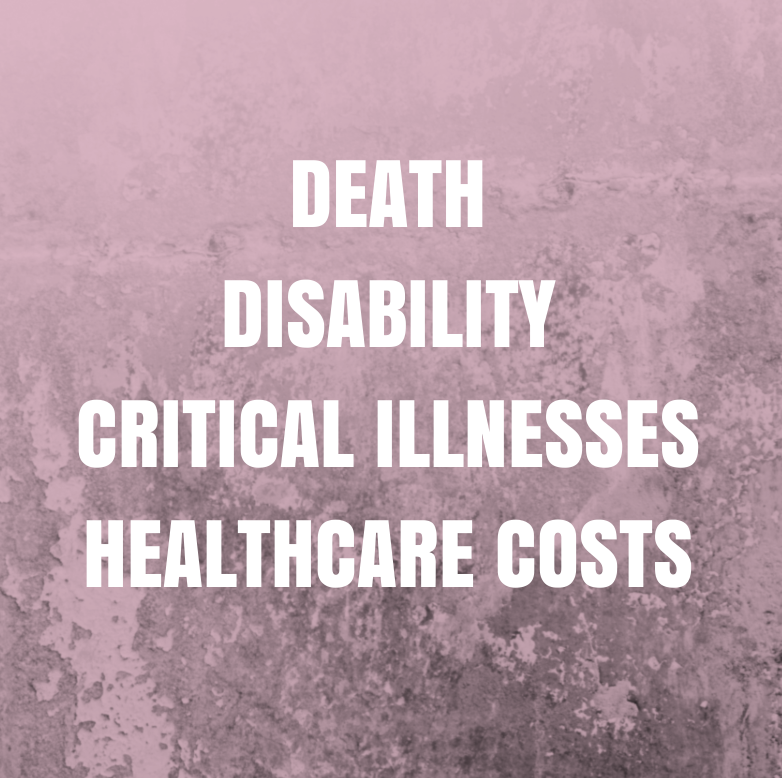
First things first, the basic function of insurance is to protect you against events which can be detrimental to your financial status. Such events include:

EVENTS

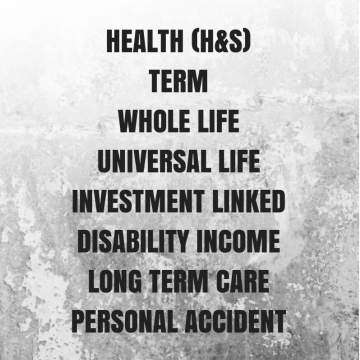
The vehicle (kind of insurance that you purchase) is what we use to protect against the events. Options are aplenty and some examples are

VEHICLES

What many people do not realise is that choosing the vehicle to use usually comes at the last stage of the planning process and that Implementation should also be in the sequence of managing the top most concern first. (So if you are concerned about hospitalisation costs, then get your health insurance in place first. Makes sense yeah?)

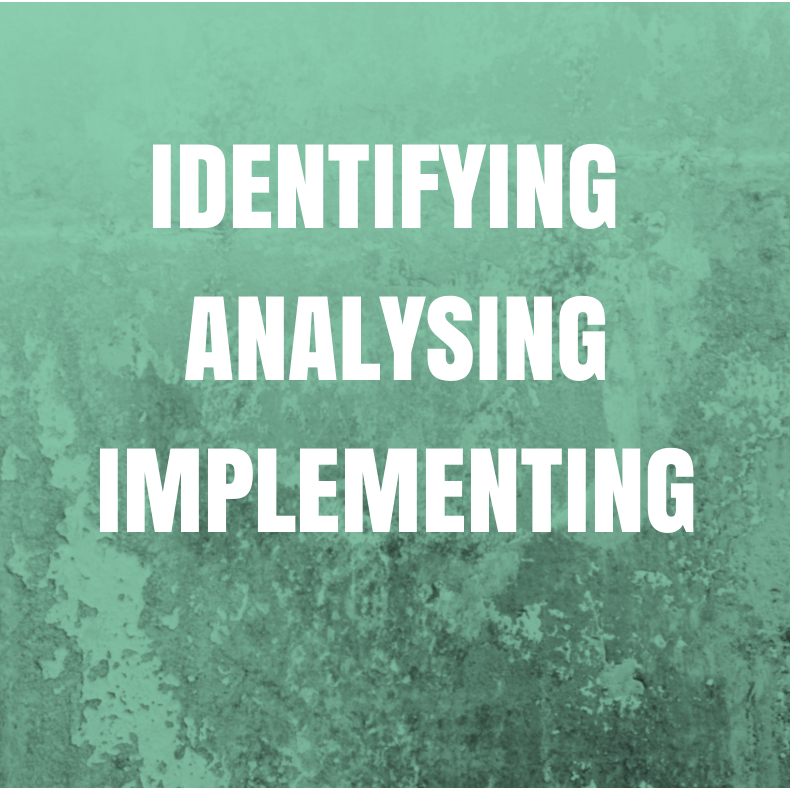
So how do we go about Risk Management Planning? Personally, I have summarised it into 3 main steps:

process

  1. The first part includes the identification of needs. Questions that you can ask yourself are: “What am I most concerned about? What kind of event would be detrimental to my life? Who are the people in my life whom I have to take care of? What is most important for me right now and why? What is my plan for the next few years? Can I self-insure?”
  2. The second part of the analysis and planning would involve the numbers “How long am I responsible for my dependents? For how long would this be a concern? How much would I need? How much liability do I have right now? How much am I willing and able to set aside for risk management?”. This is also where we bring in the data and statistics and calculate a number and target coverage to work towards to.
  3. The third and last part of the risk management planning would then be the implementation itself. That is, based on the above two points, seek for the most relevant vehicle for yourself. There are many solutions available in the market and identifying one that is right for you is definitely achievable.

On some days, I meet individuals who do not see any need for insurance because there is no pressing need for Wealth Protection. This can be true for some people. But for most of us, there is always a need (or goal) that we can fulfilled more effectively via insurance than to self insure.

Also, reasons for getting insurance go beyond just risk management. There are many ways whereby each of this insurance solution can be used to fulfill a purpose or solve a problem- such as wealth creation and transfer, in business or even for charity. Find out more in this earlier post:

photo (3)

Top 5 reasons why you would want to be covered for your Death.

photo (3)

  1. You have outstanding liabilities such as mortgage: 
    this ensures that your family can continue to stay in their place of choice even if you are no longer around. If you pass on prematurely, your spouse would likely take on the responsibility of paying for all the entire household expense- having the burden of mortgage repayment lifted off will greatly reduce the financial stress.
    If the property is simply an investment property, then the payout from the insurance would simply serve to give your family the choice to choose whenthey would like to sell the property, such as to wait for a better price.
  2. You have dependents:
    if you have kids or elderly parents, odds are you are taking care for their needs now and would want to continue taking care of them regardless. Your earning capability is what sustain their lifestyle and which allows them to live, free from financial worries. Having an insurance plan that covers for death serves to replace the income that you are no longer able to earn.
  3. You want to leave a legacy: Continue reading Top 5 reasons why you would want to be covered for your Death.