Cancer Positive List – What is it?

Financing Curb on Outpatient Cancer Treatments & How it will affect you.

Just a few years back, Singaporeans could confidently say that their hospitalisation plan will cover them for “everything”. That is, as long as you have an as-charged plan with rider. However, the situation has since changed and the coverage from our basic health insurance (Medishield Life) and our private medical insurance are no longer like before. 

For one, co-payment is now mandatory. Insurers have also employed various methods to manage costs such as the removal of fringe benefits, encouraging treatment with panel doctors & claims-based pricing method. 

A recent change on the Curb on Cancer treatments Coverage is yet another move to contain escalating medical inflation cost in Singapore.  In 2021, the Ministry of Health (MOH) introduced a list of approved cancer drugs with proven efficacies and are known to be cost effective to help keep MediShield Life premiums sustainable for the long haul. 

This change will take place from this September 2022 (for Medishield Life) / and April 2023 (integrated shield plans): 

  • Only treatments on the positive list (approved cancer drug list) will be claimable 
  • The approved cancer drugs & services claims will also be revised to a range of $200 to $9,600/month instead of a fixed amount like before. 

While the change is supposed to be for the ‘greater good’, this leaves many feeling insecure about their coverage. What if you require cancer treatment that is not on the list? This is the dilemma of one brain cancer patient as the new change takes effect. Soon, his cancer drug which cost $20k monthly will no longer be claimable under his shield plan. See the attached article. 

As policyholders, some of the options we can tap on if we were to face such a scenario would be: 

  1. Understand the scope of our employee benefits, if any and utilise them. 
  2. Check for options to increase our critical illness coverage upon life events on our existing policies
  3. Boost our critical illness coverage with a critical illness/cancer plan. Premium for $100,000 cancer coverage can be as low as $138-$228/year (for someone age 30) or $348-$688 (for someone age 45)

Update Sept 2022

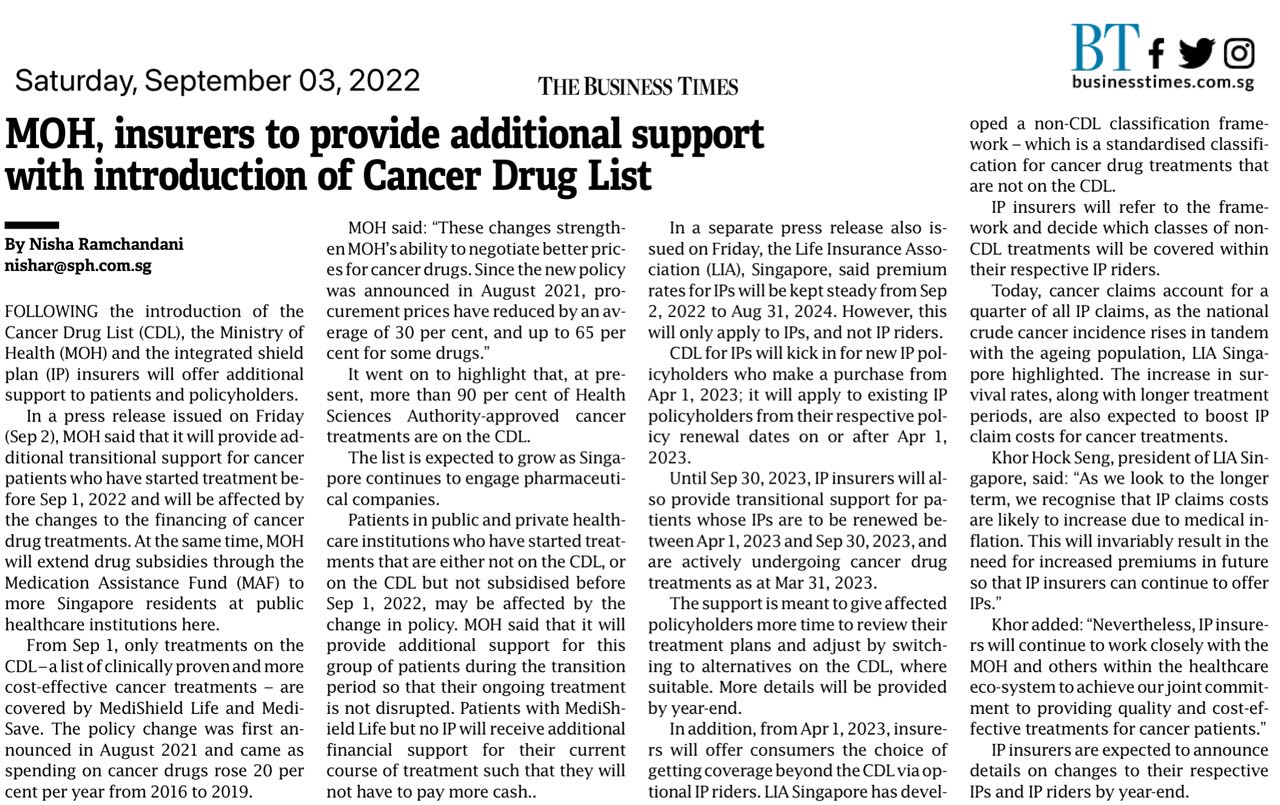
MOH, insurers to provide additional support with introduction of Cancer Drug List

Additional info TBC
How are you accumulating for retirement?

In the course of my work, the one question I love asking clients will be their outlook towards retirement accumulation.  Recently, I’ve started to classify the attitudes of my clients in their late 20s/early 30s.

(1) The Lifelong worker: Individuals who are not too concerned about the future because they believe/want to work for as long as they can.

(2) The Live Light: Those who prefer to reduce liabilities as soon as they can to reduce financial commitment, thus allowing them to ‘semi-retire’ earlier. These are usually the ones who like to clear off their mortgages and pay up for their insurance. And as soon as they are free from liabilities, they will save aggressively for their retirement. Investment volatility? No problem – because they have no liabilities.

(3) The Early Savers: Those who prefer to save aggressively when they are young, so that they can semi-retire early with multiple sources of passive income. These are the ones who kickstart their annuities early and plan more longitudinally. They don’t mind having loans as long as their total income can cover the repayments. They do not mind investment volatility either because they have the luxury of time.

(4) Retirement? Money isn’t a problem. I am building my empire! 

There’s really no right or wrong approach to retirement planning but the important thing is to know and to plan according to your preferences. After all, different strokes for different folks and what matters is that we all get there.

Do you belong to one of the above too?

If you have been thinking about your retirement (or if you have not done it at all), feel free to try out this calculator here: https://northstar.efc.sg/link/consultant/yvonnelim/retirement 

Otherwise, just drop me a note. I promise it’ll be a fun discussion!

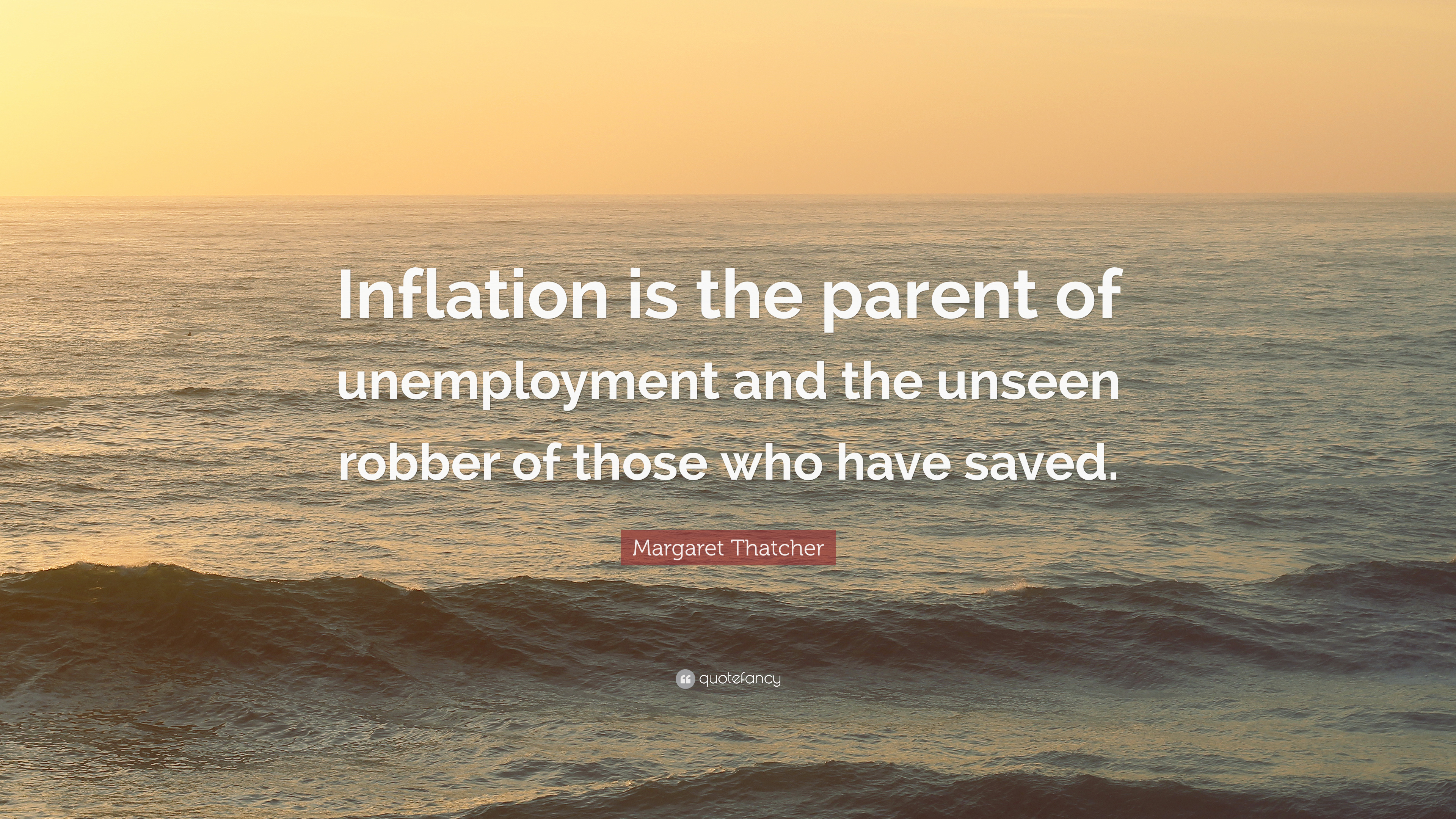
Inflation

We’ve all heard this story before, where coffee used to cost 90 cents, now it’s $1.20. That is a whopping 33% increase! However, no one becomes a millionaire by being thrifty with coffee, so why should we be bothered by inflation? 

Inflation is the sustained increase of prices in goods and services arising from 2 main causes: 

1) Cost-push inflation 
An example of such would be, an increase in the price of fuel causing your Grab ride to be more expensive. 

2) Demand-pull inflation 
An increase in demand for a particular product causes an opportunistic increase in the raw material and skilled labour required to produce it. 

As Singapore depends on our neighbouring countries to provide us with what we need, we are susceptible to the ebb and flow of external markets. The Consumer Price Index (CPI) in Singapore has shown us:

– As of 23rd December 2021, inflation was at 3.8% year on year, the highest in 8 years 
– Electricity costs have increased by 10.7% in December 2021 
– Electricity costs have further increased by 17.2% in January 2021 (just check your bill)
– As of 23rd February 2022, inflation increased further 2.4% year on year, the highest in 9 years. 

This will likely be further exacerbated by the current Russian-Ukraine situation. 

So what can we do? 

1) Create Multiple Income Streams 

Some would call it a side hustle, or a side gig. It is not enough to depend solely on 1 income source, even Warren Buffett seconds this. “Never depend on a single source of income” – Warren Buffett“. This provides us a certain degree of protection if the main source of income diminishes. 

2) Start investing 

The 2nd half of Warren Buffett’s quote reminds us that we can never start investing too early to have a second income source. And as we all know, time in the market trumps timing the market. Having a long time horizon is probably the best way to ensure that you are able to ride through volatility and have an average rate of return that trumps the long term inflation rate.

3) Every dollar counts

Reassess your savings accounts, CPF, SRS accounts, Fixed Deposits, insurance policies. Sometimes, all we have to do is to reallocate our resources into the right place. While doing this, it is also important to take into account government policies and your entitlements to maximise your return (and this can be totally risk free).

Like to review your overall financial health? Drop me a WhatsApp for an introductory call on my advisory services.

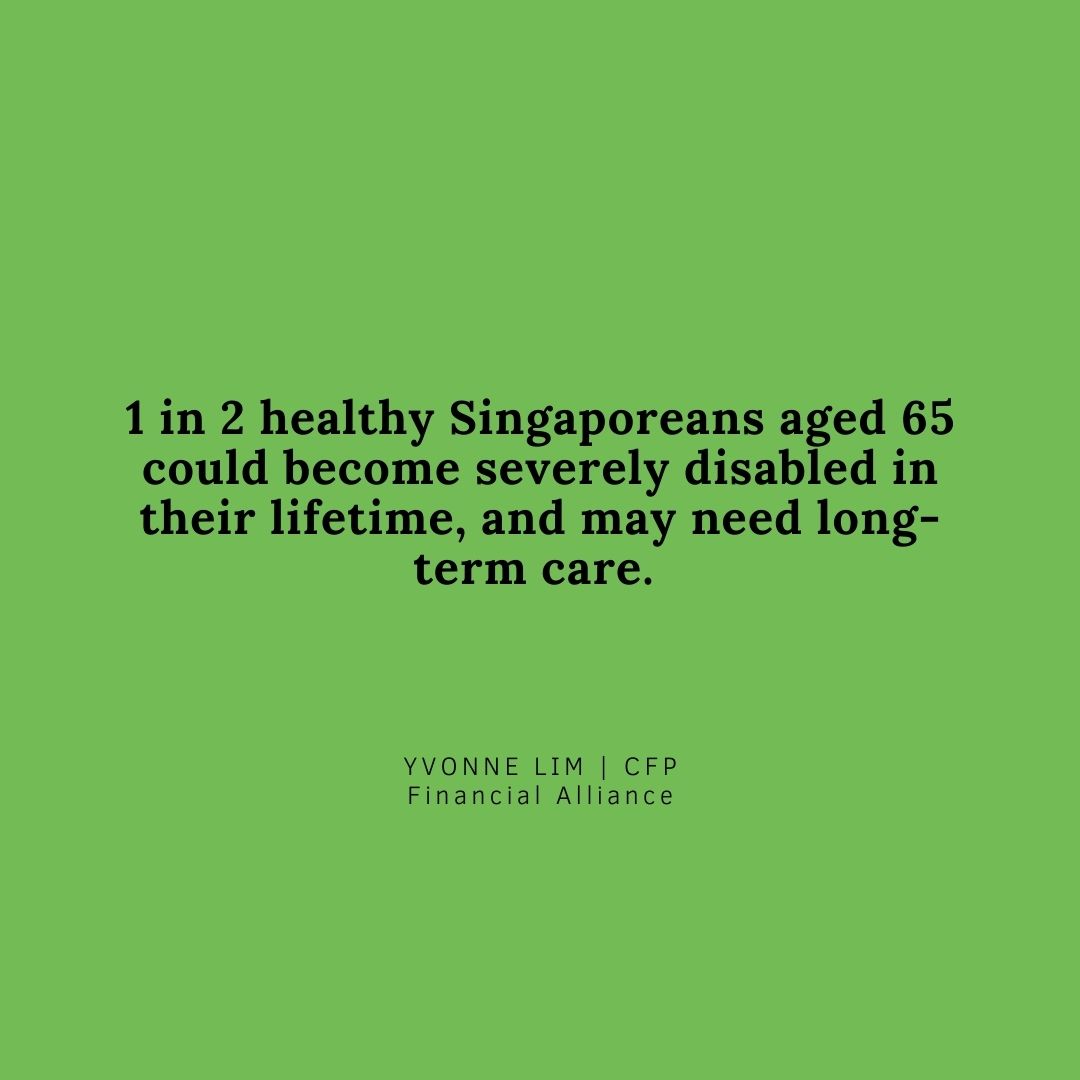
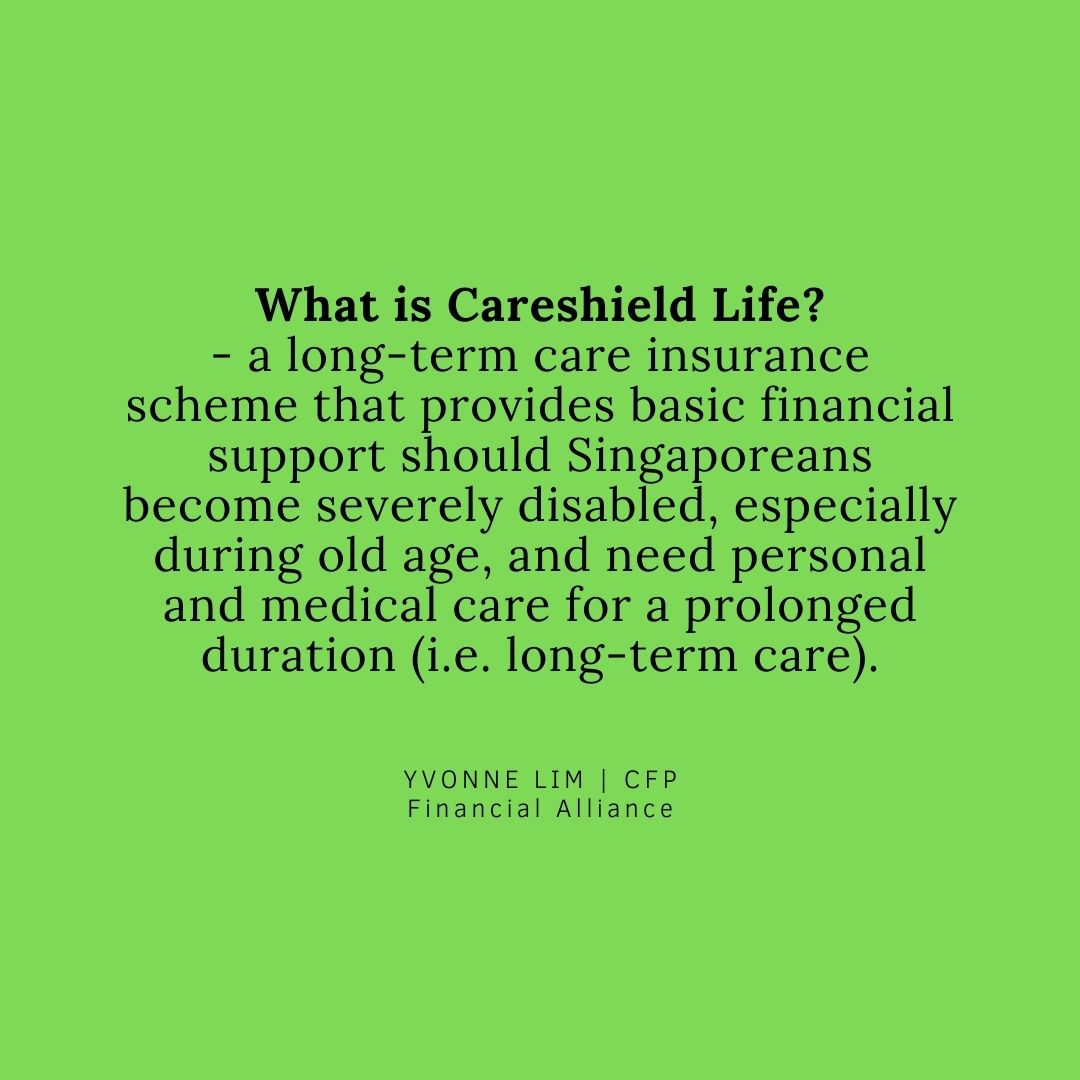
Careshield Life

Getting enrolled into Careshield life got me thinking about my preferred care choice if I were to become severely disabled. I believe I would still want to live at home, close to my loved ones but at the same time, I can only imagine how physically and emotionally taxing it would be for the caregivers.

Money and insurance will not stop us from falling sick. But I guess a little financial help will help things a little. For example, having enough payout to

(1) Replace active income during income earning years
(2) Pay for the additional expenses of a helper/nurse to assist with the caregiving

At least with the above, there will be one less thing to worry about.

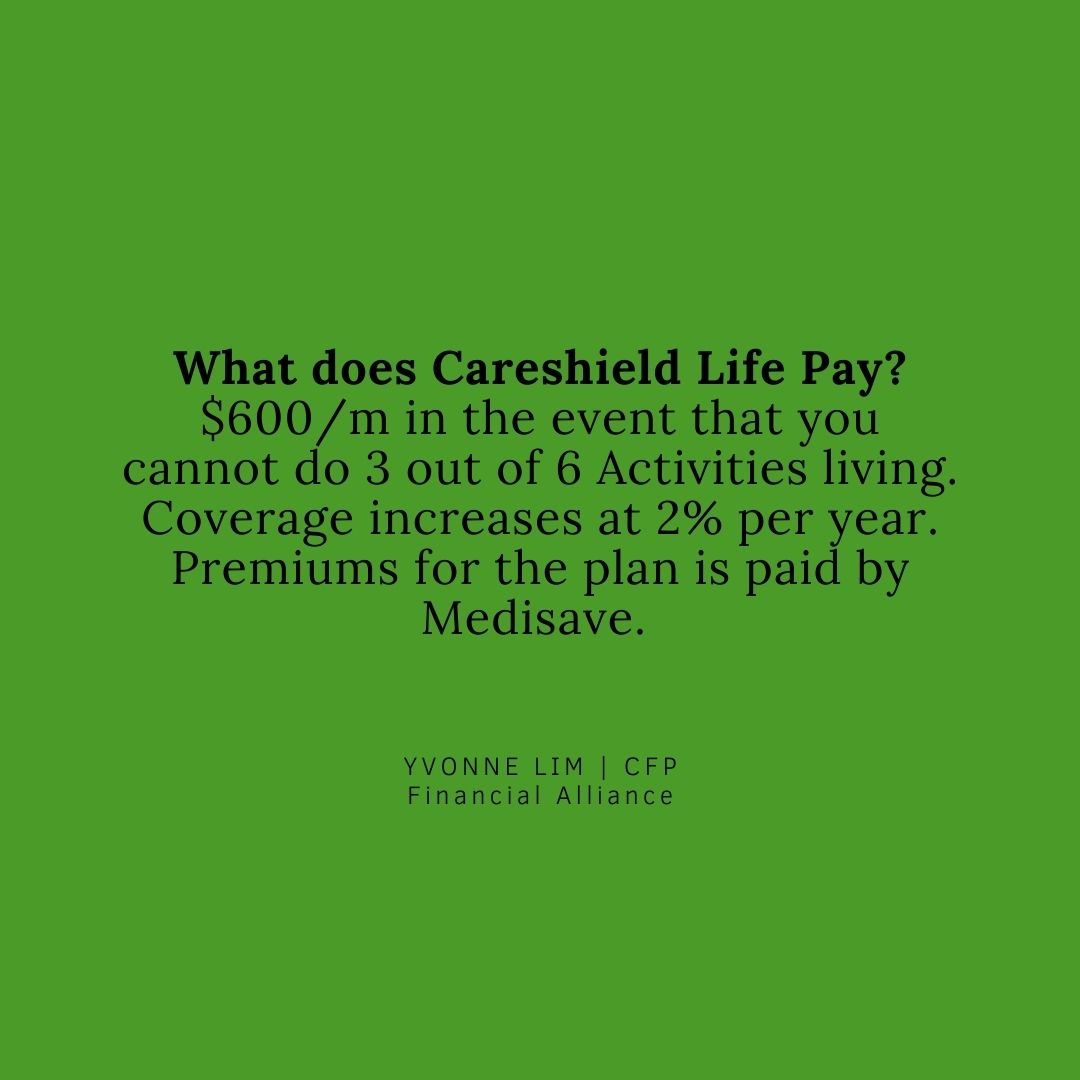
There are currently 3 insurers providing the enhancement – Aviva, Great Eastern & NTUC. The main benefits are similar (you get a higher monthly payout and you can get the payout even if you are only unable to do 2 out of 6 ADLs). Fringe benefits do differ though. So it’ll be great to talk to someone (ask me) to find out more about the plan that suits you the most.