Why people put off investing #2

For part 1 of Why people put off investing
enough

Following up on the previous post, the second reason why people put off investing is because of the belief that

#2 that they do not have enough money to make significant impact to their financial status

This is especially common with the younger crowd who are dealing with more immediate financial needs & wants.

Is there truth to this? Yes.
Is there another side to the story? Most definitely too – because while you may not have enough money, you have enough time.
So let’s first illustrate this the usual boring way and imagine that you are 25 and that you set aside $500 a month for retirement at 65. At 7%p.a return, you would have a nest egg of $1.3million then – is this a significant amount considering inflation? maybe not. but thing is, you would still be better off than not doing anything at all.
Despite this, many of the people I meet also go with the mentality they can put off investing now and make up for it by investing more in the future, when their income increases. I know of multiple reasons why that may not pan out as successfully but what I really want to share is this:

The impact of investing early goes beyond just wealth accumulation. When we start investing early, we are also accumulating experience early- which is what will make all the difference in the future. The significant impact.

Starting early allows you the opportunity to experience the ups and downs of the stock market – enough for you to understand and learn what to do and what not to do. And to put it really bluntly, the whole experience would be easier to stomach now than in the future, precisely because the invested amount would be much smaller. The emotional attachment to an investment of $20k would (should) be much lesser than an investment of $500k.
And as it is, the earlier you experience it, the more chances for you to do it over again – because fact is, there is a limited number of market cycles that we get to participate in, in each of our lifetime.

as always, the next time you think you do not have enough to invest to make a significant impact to your financial status, think again and think beyond money.
2013-11-21 09.42.41

while writing this, it also got me thinking about the other conversations that I had with a couple of friends… about how so many of us go about life with the internal conversation that we do not have enough – not enough time, not enough money. or.. believing that we do not have enough to give, to love and to lose. maybe it’s time we have a paradigm shift. hm
News that caught my eye

20131118-084633.jpg

It’s life. In retrospect, everything makes sense. But looking forward, there are always two sides to the story..

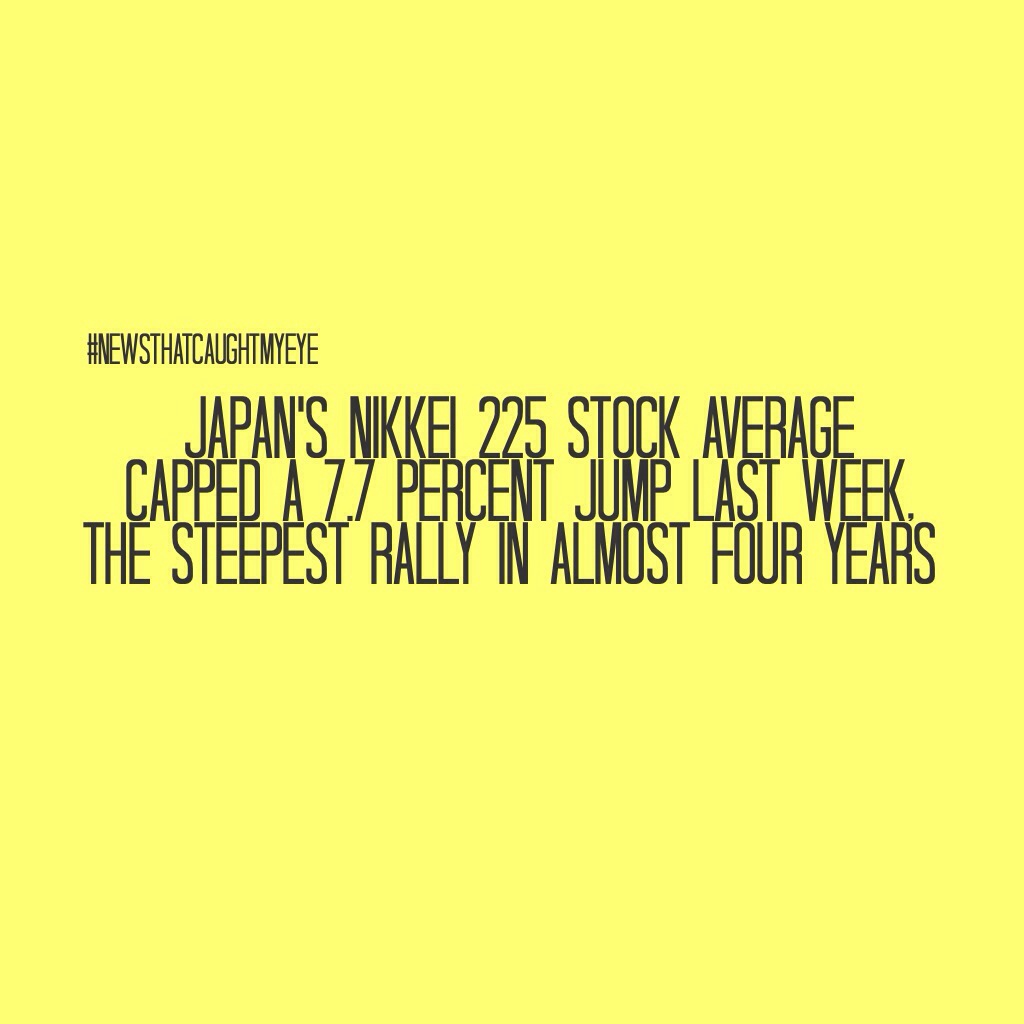
“U.S. quantitative easing will be reduced eventually, but that won’t have much of a negative impact because it happens on the back of the strong economic recovery,” said Gentoku Kiyokawa, Tokyo-based head of the Japanese investment management department at BNP Paribas. “Japanese stocks will keep climbing toward their May high and pass that level by the end of this year.”

Prices for Japanese equities already reflect the U.S. economic recovery and Yellen’s support for longer stimulus, leaving them vulnerable to declines, said Goya Nakao, a senior investment manager at Sompo Japan Nipponkoa Asset.

There will always be varying views and making investment decision under such a climate isn’t easy. (And that’s even before the the stock/fund selection consideration)
But in the end, maybe it’s the discipline in actually making the investment decision that makes the difference. The choice of action.

Source: washpost.bloomberg.com/Story?docId=1376-MWAM5F6JTSEA01-3T009A07I7B88BJNPQPOI9JO7S

Financial Myth: Budgeting is the best way to save money

I came across this article on Personal Financial Myths. And one of the myths is “Budgeting is the best way to save money”.

the essence of it is that people will keep to their budget

The article quoted Jeff Larson, the study’s co-author and an assistant professor of marketing at Brigham Young, stating that when consumers set a budget for a specific item, they oftentimes limit their searches to items priced close to the budget’s upper limit.
For example, if given $1,000 for a flat-screen TV, for instance, consumers are likely to limit their selection to televisions priced between $800 and $1,000 before looking at each TV’s features. The more effective way would be to base your shopping on specific features and qualities.

In my opinion, budgeting is still crucial. Especially for those who are likely to be swayed by marketing gimmicks and end up buying a TV with 100001 features which they do not need or even know how to operate.

General budgeting also involves knowing where your money is being spent on – this means that it helps you put things into perspective, to know what exactly are you spending money on. Sometimes, you may be surprised by

Insurance – the lifebuoy we ignore

Financial planning is really about putting the odds in our favor so that we can achieve our dreams more effortlessly.

Yet, no one really enjoys talking about insurance even if the purpose of insurance is to ensure that the odds stay in our favor when unfortunate events happen – events that can potentially cripple your financial wealth (and dreams) or cause financial difficulty to another person.

So, if we were to draw a parallel between Insurance & lifebuoy, this must be it
lifebuoy

Very often, people also fall into the trap of purchasing insurance while not knowing exactly what the the insurance does. If you are lucky, you just end up with something that you do not need. But if you are unlucky, you may find yourself without the most basic and important insurance. That is, you find yourself with a Lifebuoy which is oversized/deflated/faulty.
The first step to prevent this from happening is to gain some basic understanding on risk management…

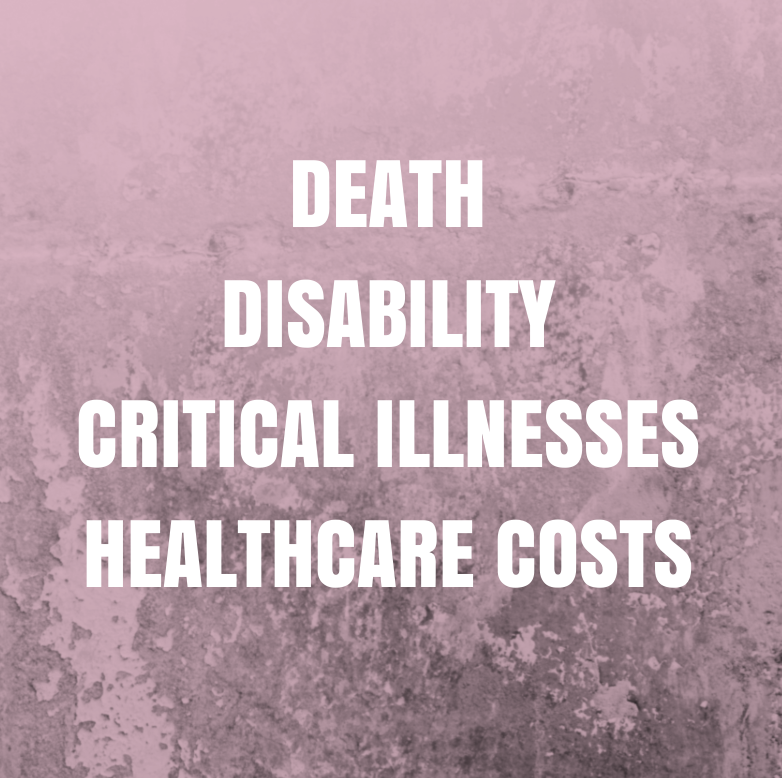
First things first, the basic function of insurance is to protect you against events which can be detrimental to your financial status. Such events include:

EVENTS

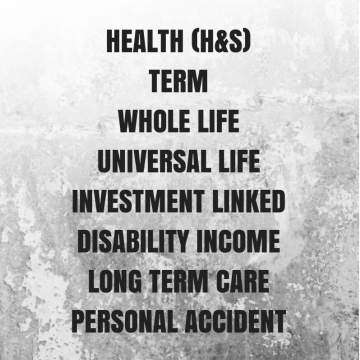
The vehicle (kind of insurance that you purchase) is what we use to protect against the events. Options are aplenty and some examples are

VEHICLES

What many people do not realise is that choosing the vehicle to use usually comes at the last stage of the planning process and that Implementation should also be in the sequence of managing the top most concern first. (So if you are concerned about hospitalisation costs, then get your health insurance in place first. Makes sense yeah?)

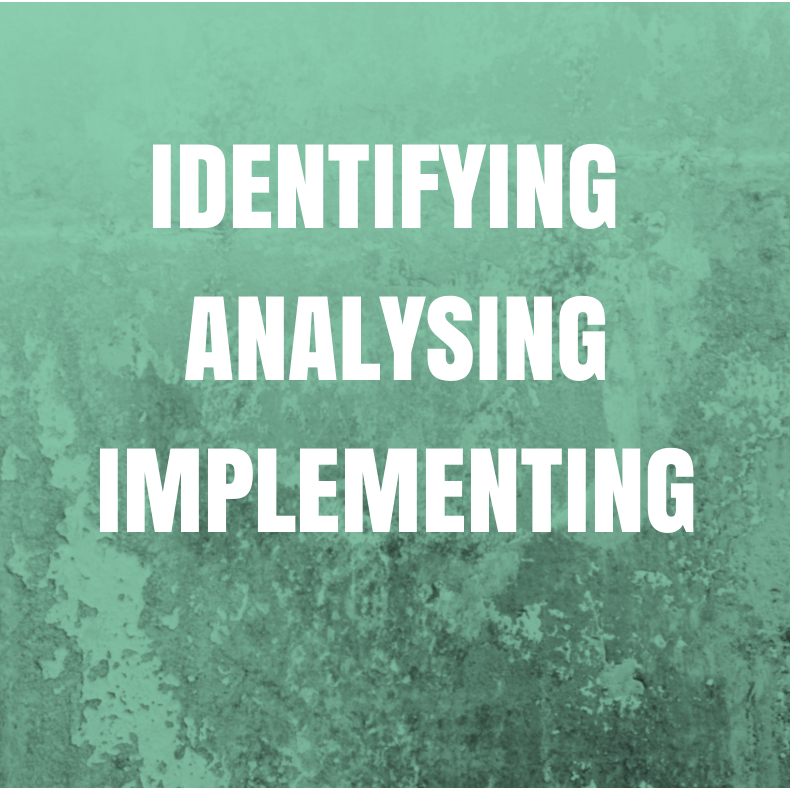
So how do we go about Risk Management Planning? Personally, I have summarised it into 3 main steps:

process

  1. The first part includes the identification of needs. Questions that you can ask yourself are: “What am I most concerned about? What kind of event would be detrimental to my life? Who are the people in my life whom I have to take care of? What is most important for me right now and why? What is my plan for the next few years? Can I self-insure?”
  2. The second part of the analysis and planning would involve the numbers “How long am I responsible for my dependents? For how long would this be a concern? How much would I need? How much liability do I have right now? How much am I willing and able to set aside for risk management?”. This is also where we bring in the data and statistics and calculate a number and target coverage to work towards to.
  3. The third and last part of the risk management planning would then be the implementation itself. That is, based on the above two points, seek for the most relevant vehicle for yourself. There are many solutions available in the market and identifying one that is right for you is definitely achievable.

On some days, I meet individuals who do not see any need for insurance because there is no pressing need for Wealth Protection. This can be true for some people. But for most of us, there is always a need (or goal) that we can fulfilled more effectively via insurance than to self insure.

Also, reasons for getting insurance go beyond just risk management. There are many ways whereby each of this insurance solution can be used to fulfill a purpose or solve a problem- such as wealth creation and transfer, in business or even for charity. Find out more in this earlier post:

photo (3)