Best investment forecast

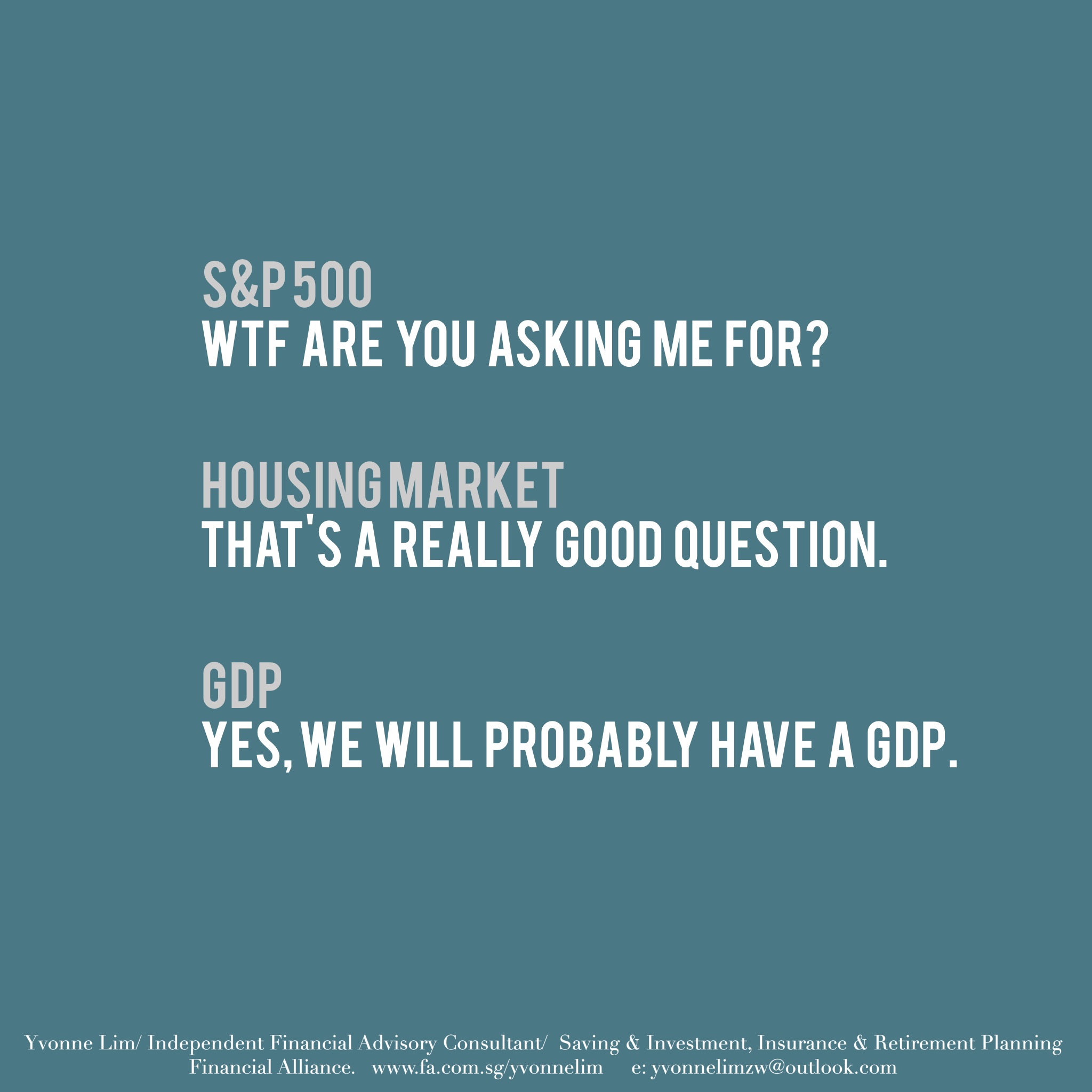
‘Market Forecast’ by Barry Ritholtz. This has got to be the best forecast.
2014-01-10 01.29.37

Full article: http://www.businessinsider.com/barry-ritholtz-2014-market-predictions-2013-12

Jokes aside, I think the key is that we can never be too certain about what’s ahead or be 100% sure of what’s going to happen and at which point in time. Aptly put, the better way is to make short-term, tactical adjustments while keeping to the long-term, strategic investment plan. 

and this too, is our guiding principle for investment portfolio management.
Emotional Spending

2014-01-07 10.18.19

I came across this term emotional spending and decided to read a little more into it. On investopedia, emotional spending is defined as when an individual spends money for the sole purpose of improving a mood. Some reasons why people engage in this behavior are to improve or maintain a mood and to cope with stress.

Personally, I am not too much of an emotional spender so it makes me wonder if it is all true. Does spending money really makes one happier, does it really improve mood and helps cope with stress?  I am not the first to question that so the below is merely a summary on what I have gathered from existing papers (power of google). 

Spending money improves a mood

Yes, it improves the mood but no, it does not make you happier. Continue reading Emotional Spending

What’s in it for the self employed.

2013-12-12 09.13.43

I recently read an interesting article on how Self Employed are not saving enough for Retirement and it got me thinking about the self-employed in Singapore. Well, mainly because I am a self-employed myself and because many of my clients are business owners. The conclusion I came to?

  1. Self employed do not save enough
  2. Self employed, in particular the small business owners, run the risk of betting too much on the future

But first off, here are some key points from the survey:

  • 7 in 10 Self employed are not saving regularly for retirement, if at all
  • 53% of employed have a fixed amount deducted from their paycheck on a regular basis; to save for retirement while only 8% of self employed do that
  • Self employed tend not to have clear distinction between their business cash Continue reading What’s in it for the self employed.